30 Most Common HTML Elements
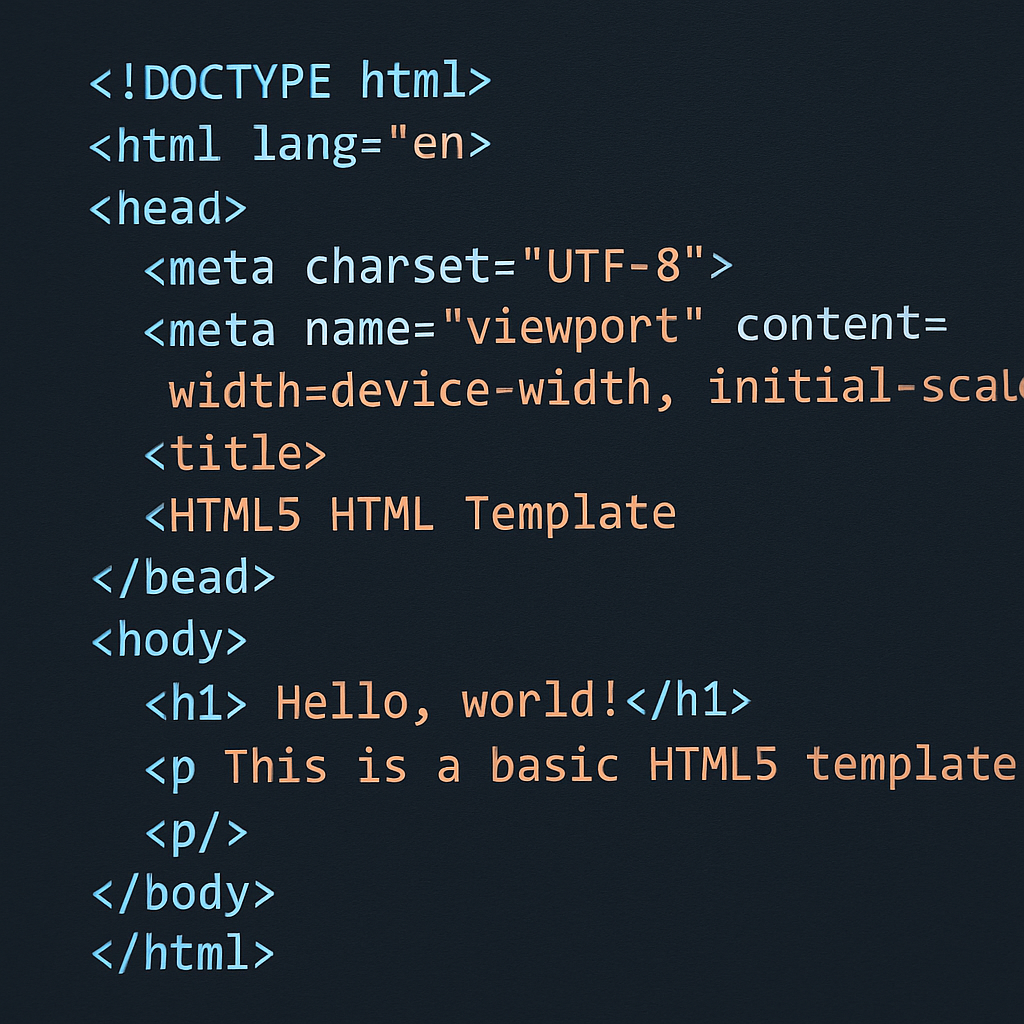
- <!DOCTYPE html>
- Defines the document type.
- <html>
- Root element of an HTML document.
- <head>
- Container for metadata and resources.
- <title>
- Sets the title shown on the browser tab.
- <meta>
- Provides metadata like charset or description.
- <link>
- Links external resources such as CSS files.
- <style>
- Embeds CSS styles directly in the document.
- <script>
- Embeds or references JavaScript.
- <body>
- Contains the visible page content.
- <h1> to <h6>
- Headings, with <h1> being the largest and <h6> the smallest.
- <p>
- Defines a paragraph of text.
- <span>
- Inline container for text and styling.
- <div>
- Block-level container for layout and grouping.
- <a>
- Creates hyperlinks to other pages or sections.
- <br>
- Inserts a line break.
- <hr>
- Represents a horizontal rule or thematic break.
- <ul>
- Defines an unordered (bulleted) list.
- <ol>
- Defines an ordered (numbered) list.
- <li>
- Represents a list item inside <ul> or <ol>.
- <dl>
- Defines a description list.
- <dt>
- Defines a term or name in a description list.
- <dd>
- Provides the description of a term in a description list.
- <img>
- Embeds an image.
- <audio>
- Embeds an audio file with playback controls.
- <video>
- Embeds a video with playback controls.
- <iframe>
- Embeds another web page inside the document.
- <canvas>
- Provides a space for drawing graphics with JavaScript.
- <form>
- Defines a form for user input.
- <input>
- Creates input fields within a form.
- <button>
- Represents a clickable button.